How AI Search Is Changing B2B Discovery, From the First Query to the Sales Call: Learnings from our Founder Peer-to-Peer Session.
Mar 30
•
6
min read
SEO and Content Marketing
Pooja Baranigutta
A Consumer Psychologist, passionate about understanding what drives people to choose, trust, and love brands.
For years, the go-to-market playbook for B2B founders looked the same. You optimized for Google, built your content around keywords, and waited for the right buyers to find their way to your website.
Then something shifted, and most founders only noticed it when it started showing up in their sales calls. Buyers were walking in already informed about the category, the competitors, and sometimes the product itself. Not because they had read a blog or browsed through a website, but because they had asked ChatGPT, Perplexity, or Gemini, and AI had already shaped their thinking before the first conversation happened.
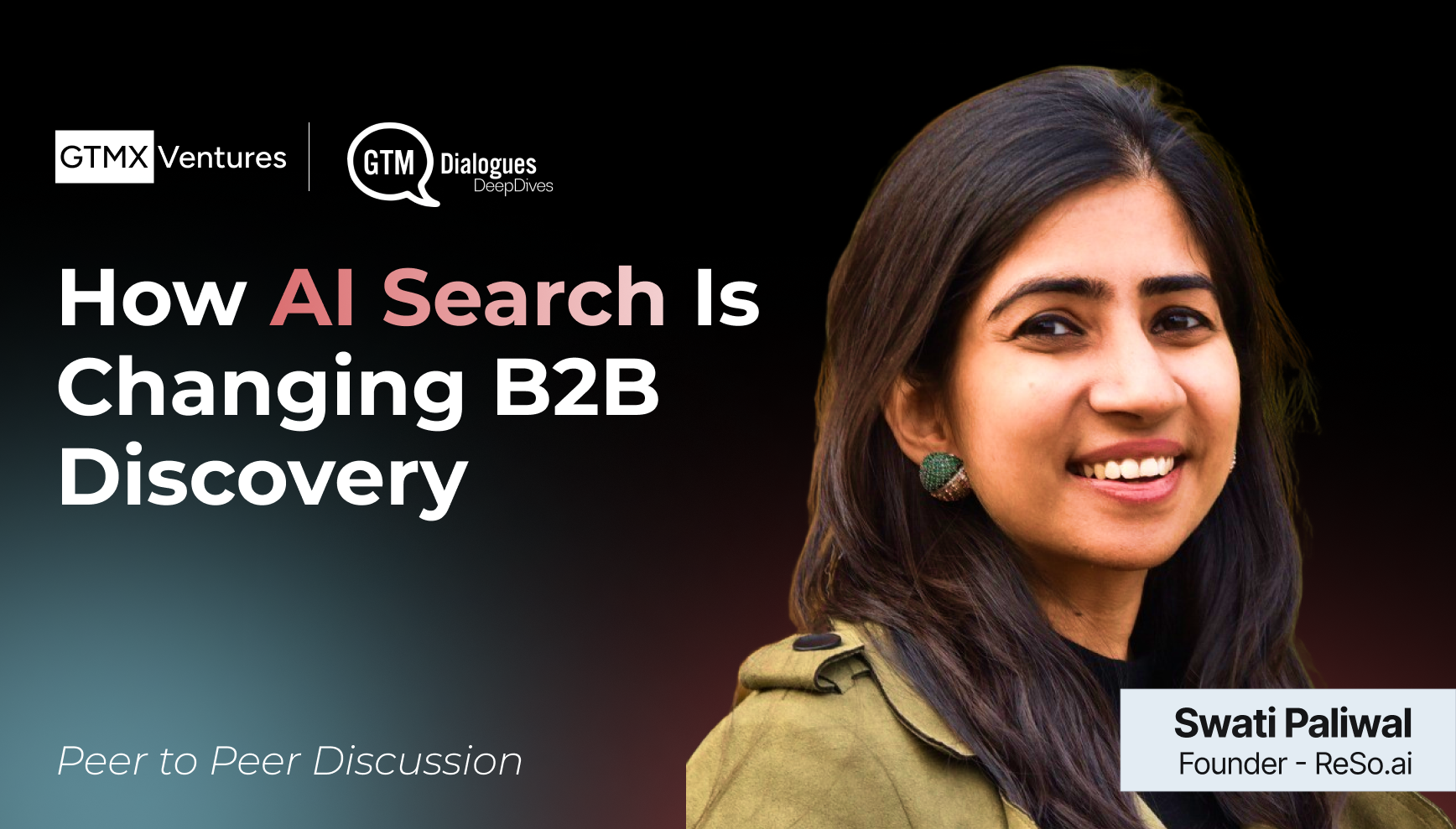
This is exactly the pattern that Swati Paliwal, Founder of ReSO.ai, noticed before she started building in the GEO space.
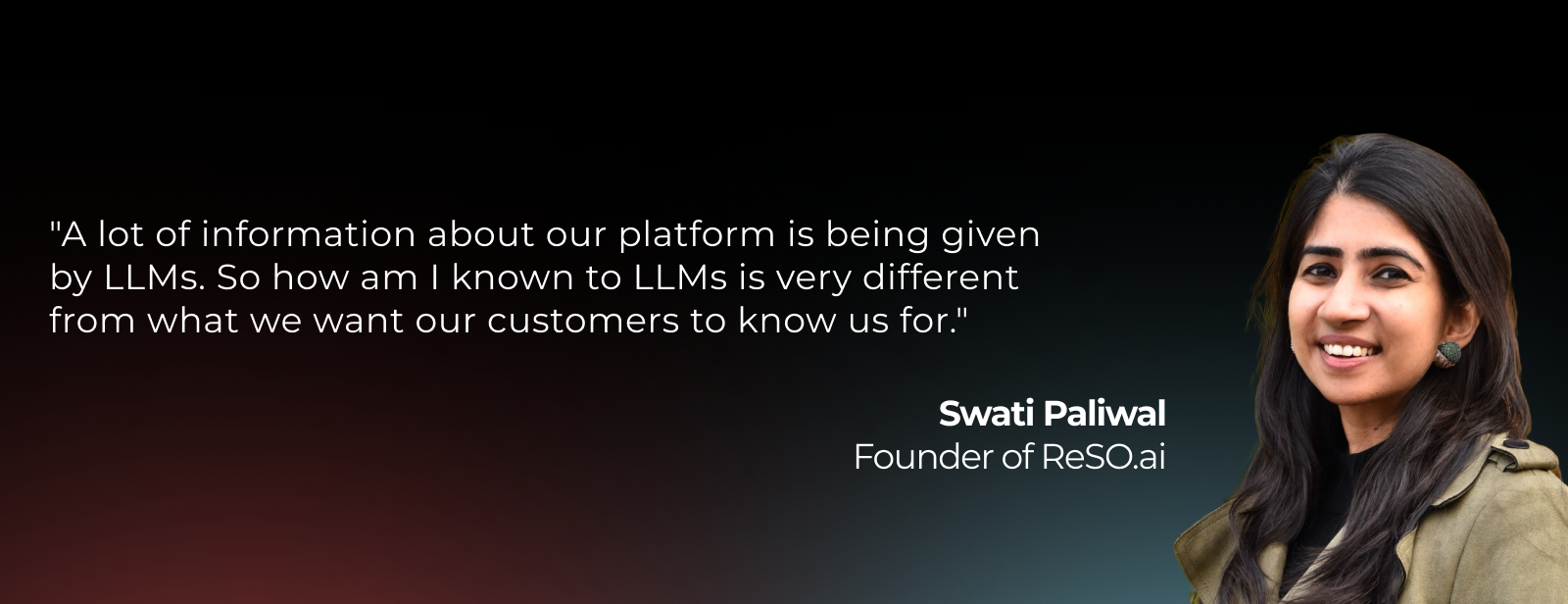
That gap between how you want to be known and how AI actually describes you is what this entire conversation is about. In the GTMDialogues Deepdives session on 17th March, Swati and fellow founder Ishaan from Chosenly walked through what this shift means for B2B founders, why your current SEO playbook only gets you part of the way there, and what you can start doing about it today.
Your B2B buyers are researching on AI tools before they ever speak to you
If you are selling to other businesses, your buyer is not a single person making a quick decision. There is a process involved, and a big part of that process today is independent research, which is increasingly happening on AI tools rather than search engines.
A buyer in an enterprise company might type a question into ChatGPT about which software solves a particular problem, read through the response, and already have a shortlist ready before your sales team sends the first outreach.
The buying journey starts in a place where you have little visibility and even less control over what is being said.
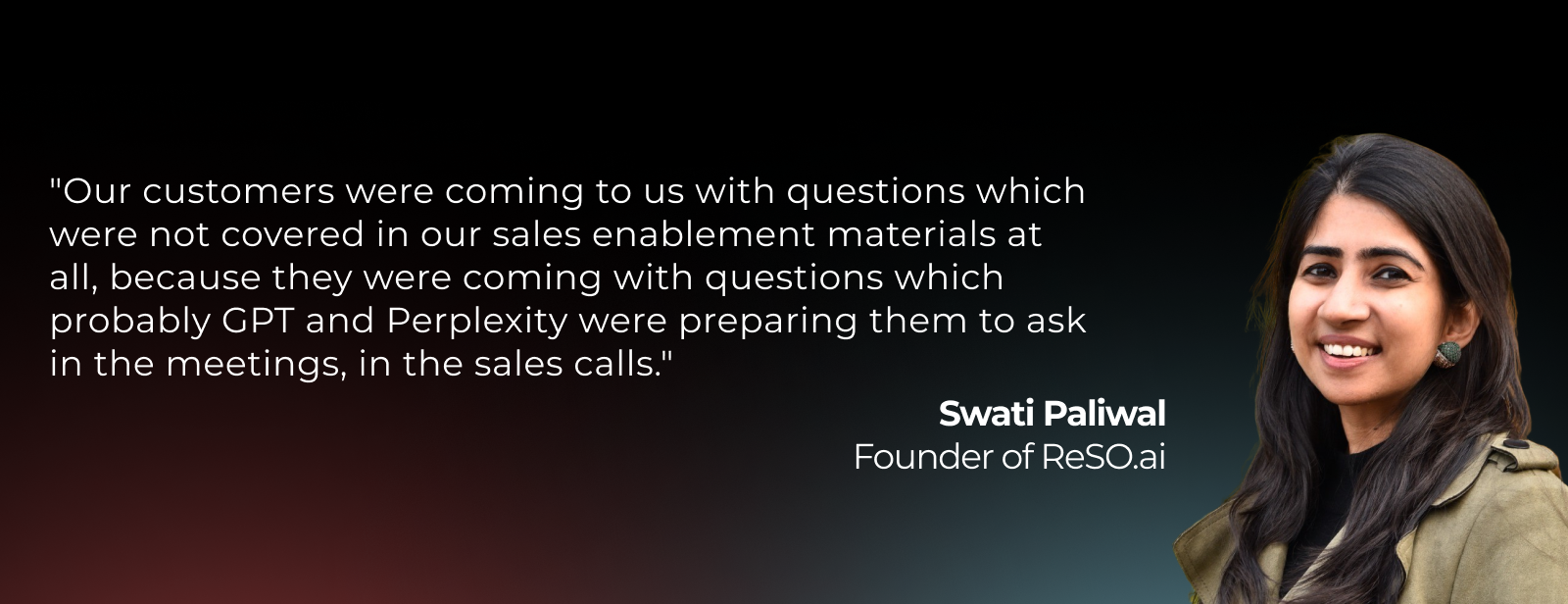
Swati shared a pattern she kept seeing with her own customers at ReSo.ai that made this very real,
What this tells you is that AI is not just a discovery tool anymore. It is actively preparing your buyers to evaluate you, and if the information AI has about your product is incomplete, outdated, or coming from the wrong sources, that preparation works against you.
There is also another layer to this that goes beyond just awareness. When a decision maker inside a large company needs to justify a purchase, they are increasingly turning to AI to validate that decision.
They share their budget, their constraints, and their options, and ask AI to help them think it through. If your product does not show up in that conversation as a credible option, you are losing deals you never even knew were happening.
GEO and SEO are not the same game, and treating them the same will cost you
Most founders who have built an inbound engine know SEO well. You understand keywords, backlinks, domain authority, and how Google ranks pages. That knowledge is still relevant, but it only takes you part of the way when it comes to AI search, because the rules underneath have changed in ways that are not immediately obvious.
SEO was built for one platform, and AI search runs across five different ones
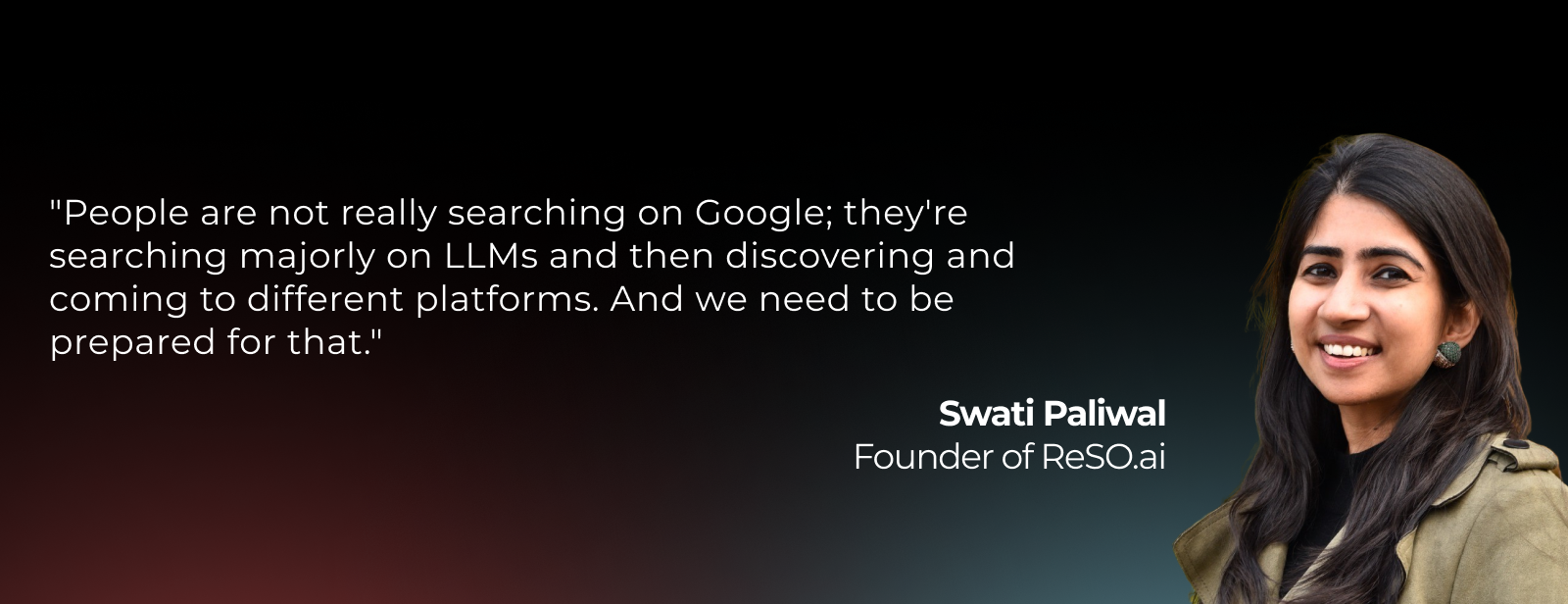
For the longest time, SEO meant Google. Every strategy, every tool, and every metric was built around how Google crawled and ranked your content. As Swati put it in the session,
Today that has changed, and here is what you are now dealing with:
ChatGPT, Perplexity, Gemini, Claude, and Copilot are all platforms your buyers are actively using to research, and each one has been trained on different data sets with different priorities.
The top ten companies that show up for the same search query can be completely different across these platforms, which means a strategy built around one platform will leave gaps in your visibility across the others.
For founders selling into enterprise, Copilot becomes especially important. Many large companies restrict their employees from using ChatGPT due to internal data policies, so those buyers are searching on Copilot instead. If you are not showing up there, you are invisible to an entire segment of enterprise decision makers.
AI does not wait for your keywords. It reads the context your buyer brings
In traditional SEO, two people typing the same keywords in the same geography would see largely similar results. AI search works very differently, and this is one of the most important things to understand before you build your strategy.
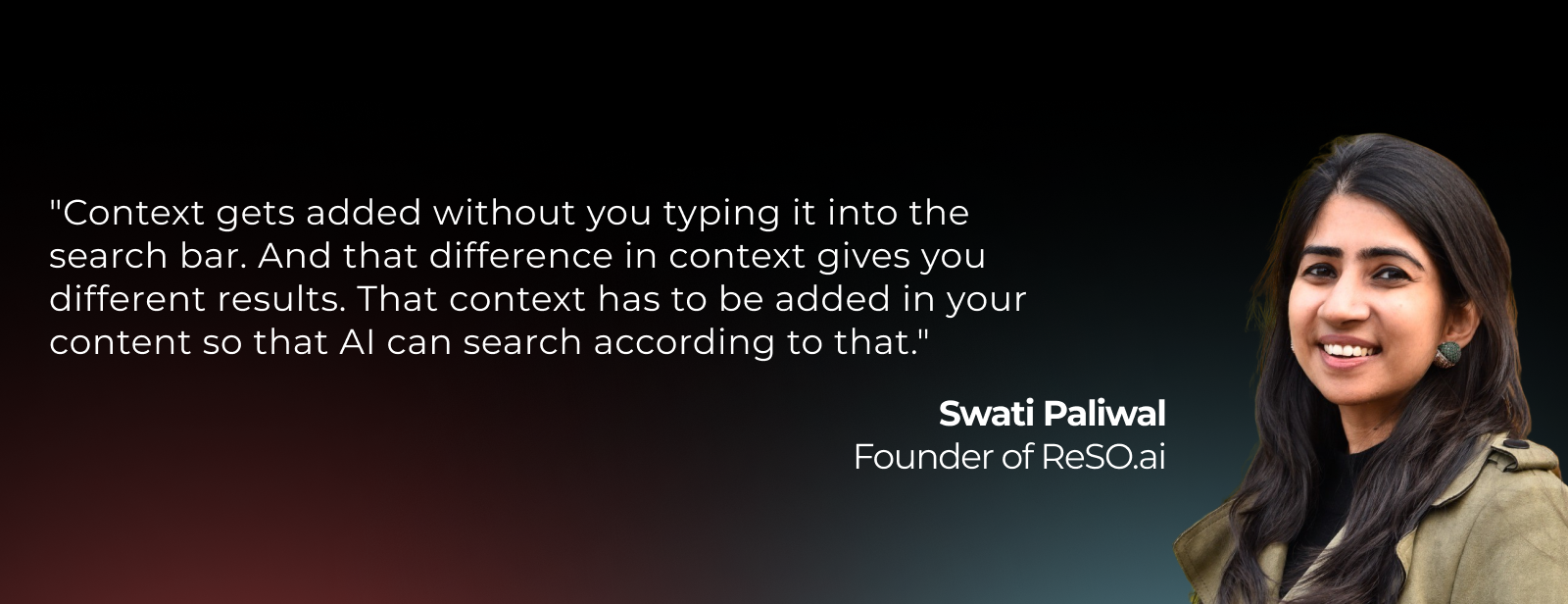
When someone searches on ChatGPT, the platform already knows who they are from their conversation history. It adjusts the answer based on whether they are a developer, a student, a founder, or an enterprise buyer, without the person having to type any of that into the search bar.
What this means for your content strategy:
Your content can no longer just target the right keywords. It needs to speak to the specific intent and situation of the buyer you want to reach.
Two founders in the same city typing the exact same query into ChatGPT will get different answers, because AI is reading the context each person brings with them.
The content that gets picked up is the content that matches the buyer's full situation, not just the words they typed.
What the internet says about your brand is what AI will tell your next buyer
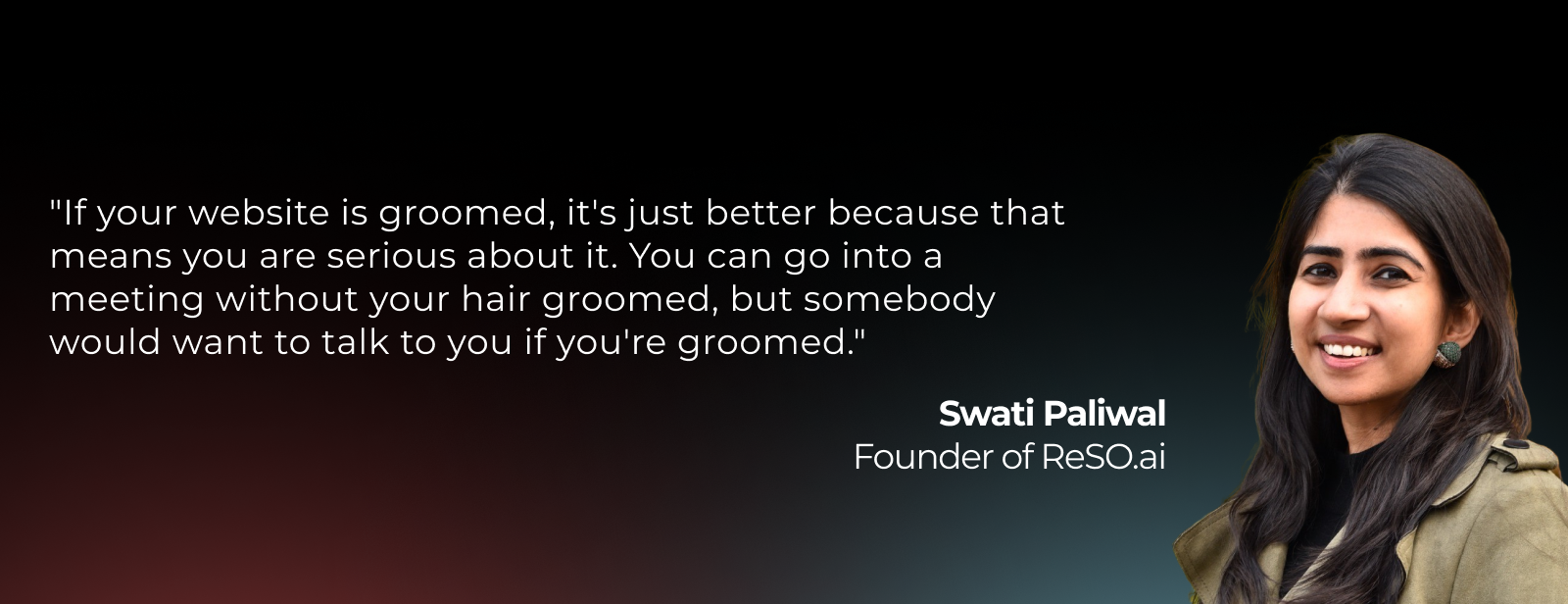
This is the part that catches most founders off guard. You might have a well-designed website, a clear value proposition, and a strong sales deck, but none of that matters if the content that AI is pulling from across the internet is telling a different story about you.
AI does not just read your website. It reads everything, blog posts, review platforms, community forums, comparison sites, and social discussions, and it forms a picture of your brand based on all of that combined. That picture is what gets presented to your buyer when they ask AI about your category.
More impressions and fewer clicks - the ‘Crocodile Mouth Effect’ explained
If you have been tracking your website analytics over the past year, you may have noticed something that looks unusual. Your impressions are going up, but your actual clicks and website traffic are not keeping pace. This pattern has a name, and Swati referenced it in the session as the Crocodile Mouth Effect.
Here is what is happening:
More people are seeing your brand name appear in AI-generated answers, which drives up impressions.
But because AI gives them the answer directly, they no longer need to click through to your website to get the information they were looking for.
The result is a widening gap between how often you are being seen and how often people are actually landing on your site.
This does not mean your visibility efforts are failing. It means the metric you use to measure success needs to change. Clicks are no longer the only signal worth tracking, and we will come to what the new KPIs look like later in this piece.
A single Reddit thread can become the source AI uses to describe your product
One of the most eye-opening examples from the session came from a real situation that Swati shared about a client whose brand perception was being shaped by just two Reddit threads with negative reviews.
Here is why this matters more than most founders realise:
AI does not verify the source before using it. If a forum thread, a review post, or a comparison blog has enough engagement and presence, it becomes a credible source in AI's eyes.
Every time a buyer asked AI for a pros and cons analysis of that product, AI was pulling from those Reddit threads and building its response around them.
The company had no idea this was happening until they started tracking which sources AI was actually citing when their brand came up in searches.
Ishaan added an important layer to this in the session,
"It matters what companies say about you. It does not matter whether they link or not. So the mention is more important than the link."
What you need to start paying attention to is not just who is linking to you, but what the broader internet is saying about you, because that is the raw material AI is working with when it talks about your brand to your next buyer.
Building your GEO strategy starts with three things you can act on today
Most founders hear about AI search and immediately want to know what the big strategic move is. The honest answer from the session was that there is no single big move. What works is a structured approach across three areas, and the good news is that you can start on all three without waiting for a perfect plan to come together.
Swati broke it down into three buckets in the session, and each one builds on the one before it.
Your website needs to be readable and structured for AI crawlers
Before you think about content or outreach, the first question to ask is whether your website is structured in a way that AI can easily read and interpret. This is not about redesigning your site; it is about making sure the basics are in place.
Here is what to check on your website:
Are your pages internally linked in a way that makes it easy for a crawler to move through your site and understand how your content connects?
Is your sitemap updated, and does it reflect the pages that matter most to your category?
Are the pages that AI is crawling most frequently actually the pages you want to be known for, or are they older, less relevant pieces of content?
You can pull your crawl logs directly from wherever your site is hosted to see which pages AI crawlers are visiting most often. That data will tell you whether the right content is being read and how frequently AI is coming back to your site for new information.
Bottom of funnel content is what gets picked up by AI search
Once your website structure is in order, the next area to focus on is content. But not all content performs equally in AI search, and this is where a lot of founders waste time by creating top-of-funnel awareness content when AI is far more likely to pick up content that sits closer to a buying decision.
As Ishaan explained in the session,
"You can ignore anything at the top of the funnel. You're only going after bottom-funnel content, which means listicles and how-to content, and go deeper into how you optimize them for GEO without making it overly complicated."
Here is how to think about your content priorities:
Listicles that place your product in a category comparison are highly effective because AI frequently pulls from these when a buyer asks for a recommendation.
How-to content that answers a specific problem your buyer is trying to solve gives AI a clear, contextual reason to surface your product as a solution.
Content that speaks to a specific buyer role, budget range, or company size performs better than generic content because it matches the context AI is already reading from the buyer's search history.
The goal is not to create more content. The goal is to create content that directly answers the questions your buyers are taking to AI tools, in the format that AI is most likely to use when building its response.
Getting mentioned on the right websites matters more than backlinks
The third bucket is about your presence across the internet, and this is where GEO diverges most clearly from traditional SEO. In SEO, you chase backlinks to build domain authority. In GEO, what matters is whether the right websites are mentioning you in the right context.
Ishaan made this point clearly in the session,
"LLMs don't care about your website as much. You can literally ignore your website completely and make a brand get recommended in LLMs just because of publishing stuff on other websites or coordinating with other websites."
Here is how to approach this:
Find out which websites AI is already citing when someone searches for products in your category. These are the sites you want to be mentioned on, regardless of their domain authority score.
Reach out to those sites and ask to be included in their listicles, comparisons, or category roundups. Some will ask for a backlink in return, some will ask for a fee, and some will simply add you if your product is relevant.
User-generated content platforms like Product Hunt, Reddit, and industry-specific forums carry significant weight in AI search. A well-placed mention on any of these can directly influence how AI describes your product to a buyer.
The shift to think about here is that you are no longer just building links. You are building a body of mentions across the internet that gives AI enough material to talk about your brand accurately and positively.
The KPIs you tracked for SEO will not tell you how you are doing in AI search
If you are still using clicks and organic traffic as your primary indicators of content performance, you are measuring the wrong things for AI search. The buyer journey has changed, and your metrics need to reflect that.
The core problem is attribution. A buyer can read about your product in a ChatGPT response, close the tab, and show up in your pipeline three days later through a direct visit, with no digital trail connecting those two events.
As Ishaan described it in the session,
"Attribution is really annoying now. With SEO, it is very simple, a click goes to your website, they convert, pretty straightforward, easy to attribute. LLMs make it very, very hard because there's no click happening."
Here is how to build a measurement framework that actually reflects what is happening today:
Track brand mentions in AI responses by running regular searches across ChatGPT, Perplexity, and Gemini for the queries your buyers are most likely to use, and note whether your brand is appearing in the answer and how it is being described.
Track citations separately from mentions. A citation means AI used your website as a source to build its answer, while a mention means your brand name appeared in the response. Both matter, but they signal different things about your visibility.
Add a form field to your lead capture asking how the person heard about you. This is one of the most reliable ways to capture AI attribution right now. As Ishant put it, "Everyone is super excited about LLMs. Everyone tells you exactly which LLM they found you on."
Use Bing Webmaster Tools to track how your content is performing in Copilot and Microsoft AI search. Swati flagged this as an underused tool that now has a dedicated AI Insights panel and captures traffic data that Google Analytics often misses.
Monitor your AI crawler frequency by pulling crawl logs from your hosting platform. If AI crawlers are visiting your site regularly, it is a signal that your content is being actively used as a source.
The shift in mindset here is straightforward. You are no longer just measuring how many people clicked through to your site. You are measuring how present your brand is in the conversations AI is having with your buyers.
If you have not started yet, here is where to begin without overwhelming yourself
A lot of founders walk away from conversations about GEO, feeling like there is too much to do all at once. The session was very clear on this: you do not need to have everything figured out before you start. You need to pick the two or three things that will move the needle and go all in on those first.
Ishaan shared a simple starting point for founders who are just getting into this.
"If you just want to get started in a couple of days, create listicles, create how-to content, and reach out and get listed in other lists. That's it. Just the simplest approach."
Here is a practical starting sequence you can follow:
Run a basic visibility check first. Open ChatGPT, Perplexity, and Gemini and search for the top three to five queries your buyers are most likely to use when looking for a product like yours. See whether your brand shows up, where it shows up, and how it is being described. This gives you a baseline before you do anything else.
Create bottom funnel content based on what you find. If you are not showing up for certain queries, look at which brands are and what content they have that you do not. Start filling those gaps with listicles and how-to content that directly addresses those searches.
Find the citations AI is already using in your category. Look at the sources AI links to when it answers questions in your space. Those are the websites you need to get mentioned on, and reaching out to them is often simpler than it sounds.
Set up Bing Webmaster Tools if you have not already. Link your website, explore the AI Insights panel, and start understanding how your content is performing in Microsoft's AI ecosystem. It takes less than an hour to set up and gives you data you cannot get anywhere else right now.
Add the "where did you hear about us" field to your forms today. This is the lowest effort, highest return action you can take right now. It costs nothing and starts building an attribution picture that will become more valuable as your GEO efforts grow.
The founders in this session who were already seeing results were not doing twenty things at once. They picked content and outreach, went deep on both, and let the data from their forms and visibility checks guide what came next.
The founders who start paying attention to AI search today will have a real advantage six months from now
The shift from SEO to GEO is not something that is coming in the near future; it is already here, and it is already influencing how your buyers think about you before they ever reach out.
The good news is that the fundamentals are not completely different. Good content, strong presence across the right platforms, and a clear understanding of your buyer still matter. What has changed is where that presence needs to exist and how AI reads and uses it.
You do not need to rebuild everything from scratch. You need to understand where your buyers are doing their research today, make sure the right information about your product exists in those places, and start measuring whether AI is picking it up.
The founders who treat this as a priority now will have a body of mentions, citations, and AI visibility built up by the time the rest of the market catches on. The ones who wait will find themselves starting from zero in a space that is only going to get more competitive.
Start with a visibility check this week. Find out what AI is saying about you today, because that is the only way to know what needs to change.
Frequently Asked Questions
Q1: How is GEO different from SEO, and do I need to treat them as completely separate strategies?
They are not completely separate, but they are not the same either. The technical foundations of your website, the quality of your content, and your overall online presence still matter in both.
What changes in GEO is that you are optimising across multiple AI platforms instead of just Google, context matters more than keywords, and mentions across the internet carry more weight than backlinks alone. Think of GEO as an extension of your SEO efforts, not a replacement for them.
Q2: Which AI platform should I prioritise first when building my GEO strategy?
For most B2B companies, ChatGPT sends the most traffic today, so that is a reasonable place to start. However, if you are selling into enterprise, Copilot becomes equally important because many enterprise employees are restricted from using ChatGPT and rely on Microsoft's AI tools instead. Start with the platform your specific buyer is most likely using and expand from there as your capacity grows.
Q3: How do I know if AI is already talking about my brand and what it is saying?
The simplest way to start is to open ChatGPT, Perplexity, and Gemini and search for the queries your buyers are most likely to use. See whether your brand appears, where it appears, and how it is being described. You can also pull the crawl logs from your hosting platform to see how frequently AI crawlers are visiting your site and which pages they are reading most often.
Q4: Should I be worried if there is negative content about my brand on forums or review sites?
Yes, and it is worth taking seriously. AI does not verify the credibility of a source before using it. If a forum thread or review post has enough presence on the internet, it becomes part of how AI describes your brand to buyers.
The first step is to find out which sources AI is currently citing about your product and then work on building a stronger body of positive mentions across the right platforms to shift that picture over time.
Q5: What is the most practical thing I can do this week if I am just getting started?
Run a visibility check across the top three AI platforms for your category. Add a "where did you hear about us" field to your lead capture forms. And write one bottom-funnel piece of content, either a listicle or a how-to, that directly answers a question your buyer would take to an AI tool.
These three actions will give you a baseline to work from without requiring a large investment of time or resources.
Q6: How do I measure whether my GEO efforts are actually working?
Track brand mentions and citations in AI responses regularly. Monitor your AI crawler frequency through your hosting platform. Use Bing Webmaster Tools to see how your content is performing in Microsoft's AI ecosystem.
And pay close attention to the data coming in from your "where did you hear about us" form field, as this will give you the most direct picture of how much of your pipeline is being influenced by AI search.
Pooja Baranigutta
A Consumer Psychologist, passionate about understanding what drives people to choose, trust, and love brands.



.png)