Understanding the Investor: What Every Founder Must Know Before They Start Raising
Jun 5
•
12
min read
Fundraising strategy
0 to 1 Stage
Saurabh Lahoti
Saurabh Lahoti is the founder of GTMDialogues, helping early-stage B2B startups scale with sharper GTM strategy, inbound marketing, and founder-led storytelling.
You might have spent 12 to 18 months building, talking to customers, losing sleep over unit economics, and iterating on a vision you deeply believe in. The person on the other side of the table has spent 30 minutes skimming your deck. Yet they get to decide.
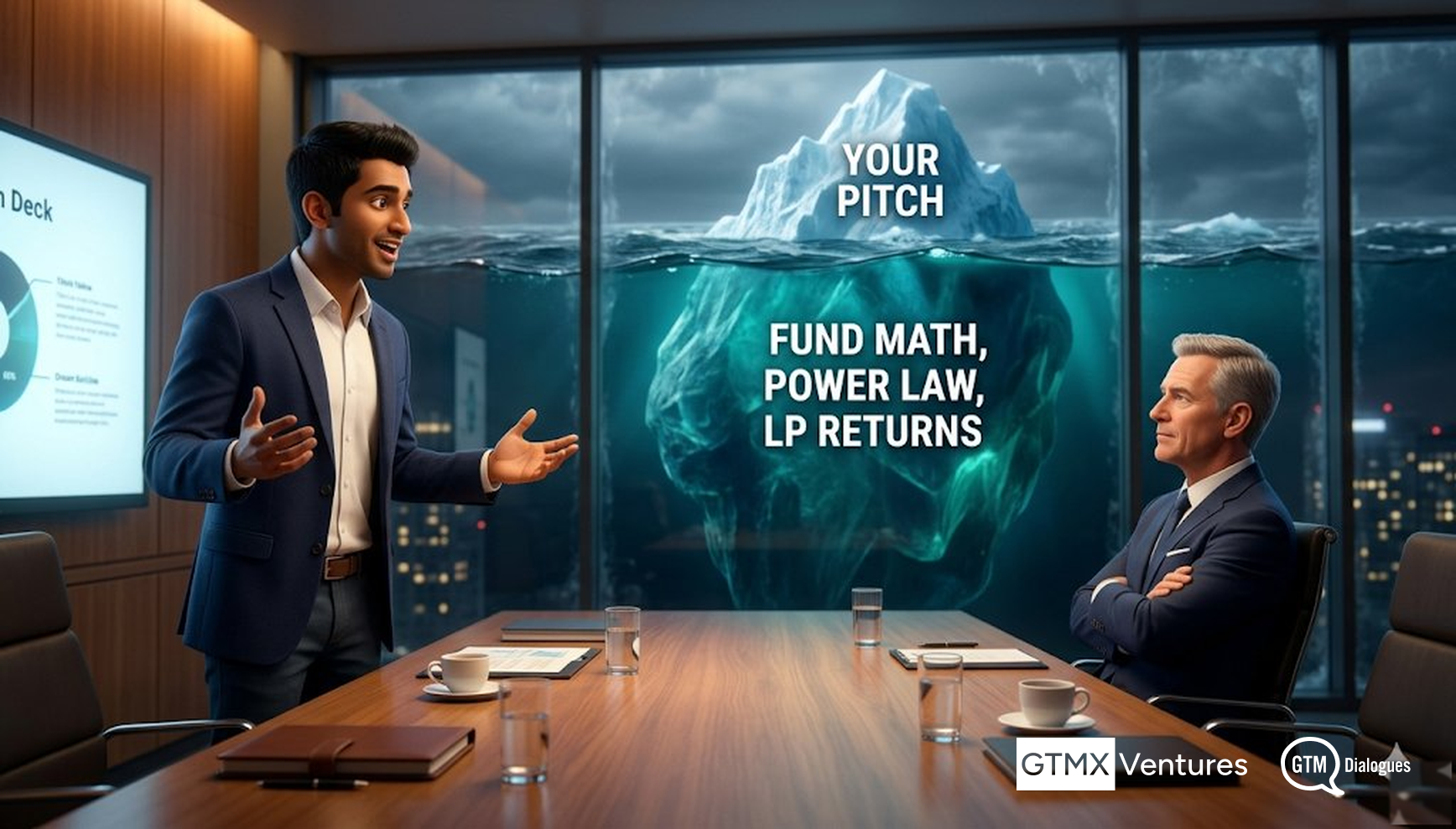
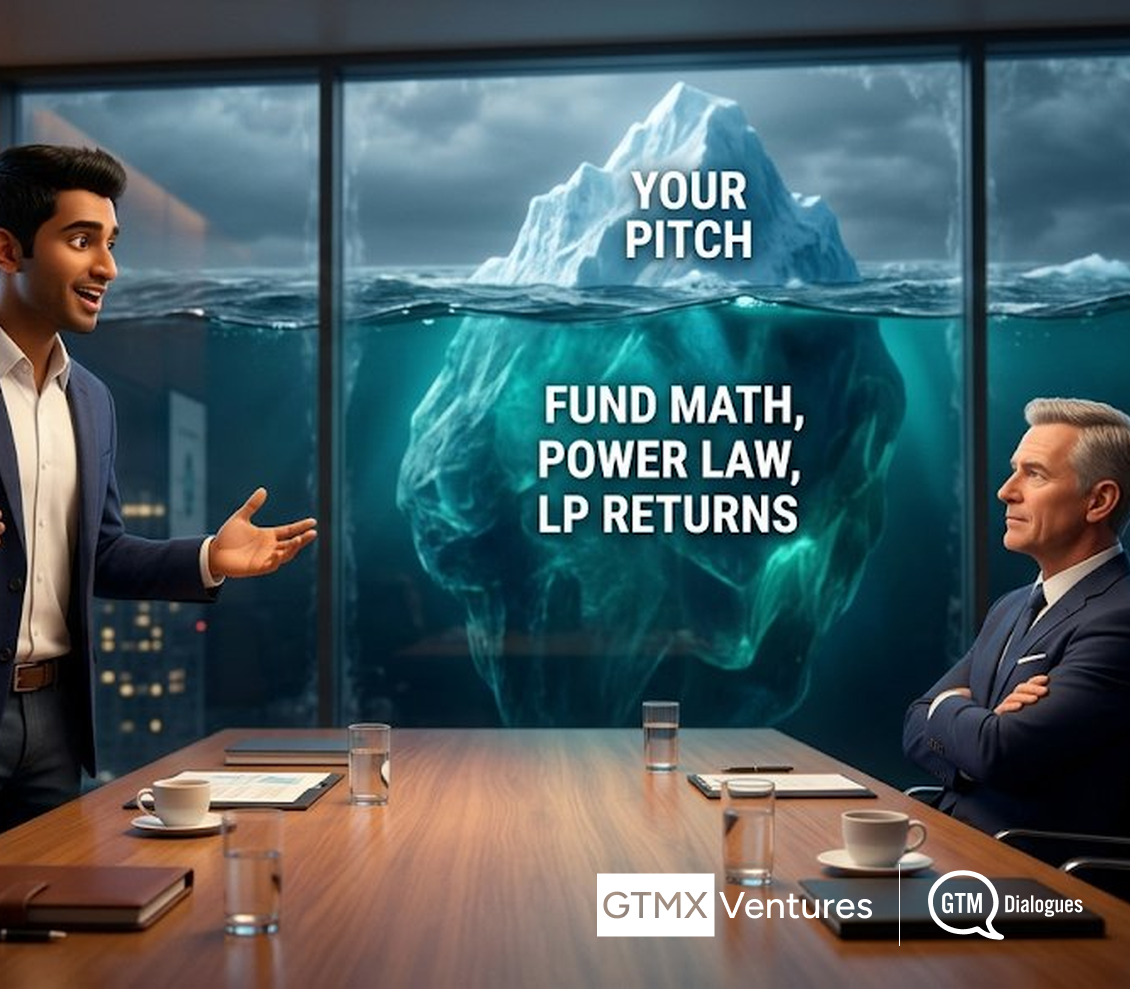
Most founders prepare for fundraising by refining their pitch. Very few prepare by understanding the financial machine they're pitching into. A VC fund isn't a passion project. It's a financial instrument with LP commitments, return targets, and a fixed lifespan to deliver on both.
When you walk into that room without understanding that context, you're essentially selling a product to a customer whose needs you haven't researched. This article breaks down exactly what drives a VC's decision, what they're trained to evaluate, and where your edge as a founder actually sits.
The Gap Between What You Are Pitching and What a VC Is Deciding
Most founders walk into a fundraising meeting thinking about their startup. The VC across the table is thinking about their fund. That gap, small as it sounds, is why most pitches don't land the way founders expect.
Here is a useful way to think about it. When India selects its World Cup squad, the selectors aren't looking for 15 balanced, reliable players. They are looking for the one or two who might single-handedly change the course of a tournament. The squad exists to support and protect that bet. No selector in that room is thinking about average performance across the board.
A VC portfolio works the same way, except the math is more unforgiving and the money belongs to someone else.
Bill Gurley, who spent over two decades as a General Partner at Benchmark and backed companies like Uber and Zillow, put it plainly in a conversation with Barry Ritholtz: "One in a hundred could return the fund. You gotta find that one. Think about that. That's a really weird dynamic to be out there doing."
That dynamic shapes everything. A fund manager raises capital from Limited Partners, typically institutions, family offices, and high-net-worth individuals, and has roughly 10 years to deploy it and return multiplied proceeds. The target is usually 3 to 5 times the fund size within that window.
Fred Wilson of Union Square Ventures, whose 2004 fund eventually returned 14 times its capital, laid out what this means in practice. Out of 20 to 25 investments, the top 4 or 5 will produce 80% of the returns. The bottom 10 or so will produce roughly 5%. The failure rate isn't a flaw in the model. It is the model.
The data confirms it at scale. Horsley Bridge, one of the largest fund-of-funds managers globally, found in their portfolio analysis that roughly 6% of investments generated 60% of total returns across their entire portfolio.
If you're raising in India, this math doesn't change. If anything, the pressure is sharper. Karthik Reddy, co-founder of Blume Ventures, one of India's most active early-stage funds, has been publicly candid about this: their IRR landed in the late teens when he would have preferred it closer to the mid-20s. That gap between expectation and reality is exactly what drives how hard Indian VCs push their portfolio companies on growth. The 25% IRR benchmark isn't arbitrary. As Karthik himself has explained, a two-bagger in three years is 25% IRR, a three-bagger in five years is 25% IRR. Every check a VC writes is quietly doing that math against your growth trajectory.
There's also a structural blind spot worth knowing. Vinod Khosla, speaking at the Moneycontrol Startup Conclave, pointed out that Indian investors tend to value revenue too much and overlook asset building.
If you're building something with network effects, proprietary data, or deep-tech foundations, you may need to work harder to make that case to a domestic investor than a global one. The room will default to asking about revenue. Your job is to make the underlying asset impossible to ignore.
Peak XV Partners, formerly Sequoia India, has returned over $7 billion to investors since inception across a portfolio of more than 400 companies. A handful of those companies drove the bulk of that number. That is the Indian power law, playing out in real time, and it is exactly the kind of outcome every VC sitting across from you is quietly betting you might be.
So when a VC passes on your startup, it is a verdict on whether they can see it becoming the one company that makes their entire fund worth raising again. That is the lens you need to pitch through. Not "is this a solid business?" but "can I show them why this is the company their fund cannot afford to miss?"
Your Ground-Level Knowledge Is What a VC Cannot See
There's a common mistake founders make when they walk into a VC meeting. They either over-explain things the investor already understands deeply, or they assume the investor has the same ground-level context they do. Neither works in your favor.
Understanding exactly where a VC's knowledge starts and stops lets you structure your pitch around the gaps that matter. Here's what that map actually looks like.
What VCs are genuinely good at:
Evaluating founders at scale. A partner at an active fund meets anywhere between 200 to 300 founders a year. They develop a pattern recognition for founder quality, coachability, and conviction that is hard to replicate. When they're assessing you, they're running you against hundreds of prior reference points.
Reading business models. VCs can identify structural weaknesses in a business model within minutes. Unit economics, margin profiles, customer acquisition costs, payback periods. These are not new concepts to them. Walking in and explaining what MRR means is not a good use of anyone's time.
Top-down industry view. Most active VCs have a thesis on every major sector they cover. They know which markets are growing, which are contracting, and where the regulatory and competitive headwinds are forming. Sequoia's sector reports and a16z's market analysis are good examples of how deeply funds map industries before they ever meet a founder.
Validating through their network. Before a term sheet, most VCs will make 10 to 15 reference calls. To your customers, your competitors' former employees, and domain experts in your space. Their network is a validation engine, and it moves faster than most founders expect.
Understanding numbers in context. A VC doesn't just look at your revenue. They benchmark it. They're comparing your growth rate, margins, and churn against every comparable company they've seen at your stage. As Y Combinator's growth benchmarks suggest, a 10% month-on-month growth rate at early stage is considered strong, but context always matters.
What VCs genuinely don't know, and where you hold the edge:
The specific niche you operate: A VC might have a thesis on fintech, but they don't know that a specific segment of MSME lending has a 60% rejection rate from traditional banks due to documentation gaps. You do. That ground-level specificity is something no amount of top-down research surfaces.
Your customer's actual behavior: Industry reports tell VCs what customers say they want. You know what they actually do. The workarounds they've built, the tools they've stitched together, the complaints they voice in conversations that never make it into any survey. That behavioral truth is your most defensible asset in a pitch room.
The non-obvious distribution insight: VCs understand broad go-to-market patterns, but they don't know that your specific customer segment makes buying decisions at trade association meetings, or that WhatsApp groups are the primary discovery channel in your niche. That kind of insight signals deep market immersion.
Ground-Level Insight Is the One Thing a VC's Research Budget Cannot Buy
When you walk in with proprietary customer knowledge, specific behavioral patterns you've observed, or a non-obvious insight about how your market actually works, you're giving the VC something they can't get from any other meeting that week.
The Knowledge Gap
The knowledge gap — where your edge lives
What a VC already knows
Their strengths
Founder pattern recognition
200–300 founders a year. They read quality, coachability, and conviction fast.
Business model fluency
Unit economics, CAC, payback periods. Don't explain what MRR means.
Top-down industry view
Sequoia and a16z map entire sectors before they ever meet a founder.
Network validation
10–15 reference calls before a term sheet. Their network moves fast.
Benchmarking in context
Your numbers get compared against every company they've seen at your stage.
What a VC cannot see
Your edge
Niche-level ground truth
A VC knows fintech. You know the 60% MSME rejection rate no report surfaces.
Actual customer behaviour
Reports say what customers want. You know what they actually do.
Non-obvious distribution
That your buyers decide at trade meets, or that WhatsApp is your discovery channel.
The workarounds
The tools customers have stitched together. The complaints that never make surveys.
The uninvestigated gap
The 40% manual error rate in a segment no existing software addresses.
The rule
Your job in the room is not to prove you've done your homework on publicly available information. It is to show them what they cannot see from the top, and why you are the one who can build the solution for it.
Every Investor Bets on the Market Before They Bet on You
Every VC meeting, regardless of fund size or stage, is trying to answer three questions. Not all of them will be asked out loud, but every question in the room traces back to one of these three.
Can Your Startup Become a Big Enough Outcome to Move a VC's Entire Fund?
Don Valentine, the founder of Sequoia Capital and the man who backed Apple, Cisco, Oracle and Google from their earliest days, had a famously simple answer to why Sequoia consistently outperformed. While other VCs talked about backing the best and brightest founders, Valentine said Sequoia focused on something else entirely: "The size of the market, the dynamics of the market, the nature of the competition." His investing checklist had one non-negotiable at the top: it must be a very big market. Not a growing niche. Not a promising segment. A very big market.
A VC today isn't just asking if your market is large. They're asking if your specific path through that market can produce a return that meaningfully moves their fund. A large TAM number on a slide is not the answer to that question. A credible, specific path to dominance within it is. When you walk into that room, be ready to answer:
What is the specific segment you are entering first, and why is it the right beachhead to a much larger market?
What does your growth path look like from that beachhead to the broader opportunity, and what unlocks each step?
Why does your approach to this market produce returns that are structurally different from every other company a VC has seen in the same space?
Are You the Right Founder to Solve This Specific Problem at This Specific Moment?
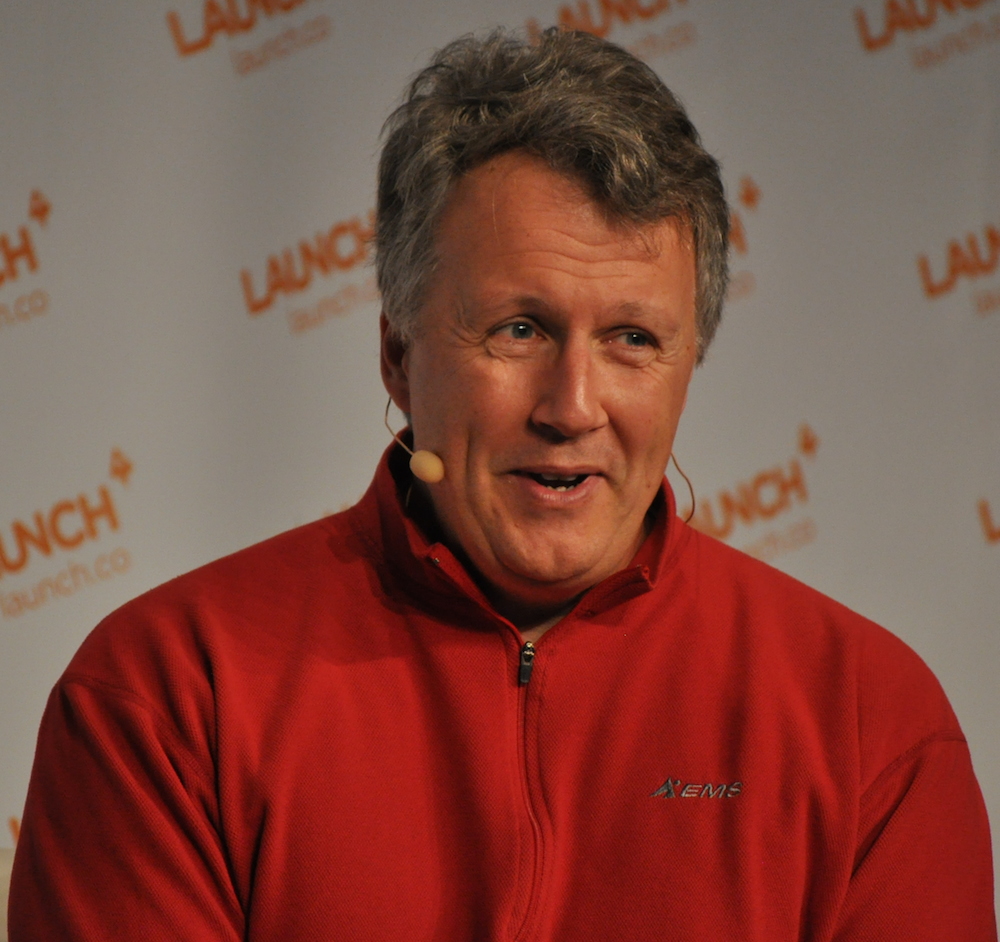
Paul Graham of Y Combinator has written about this directly, noting that what a VC is really evaluating isn't the idea a founder starts with, it's their ability to navigate toward the right one. The question underneath the question is whether you have the specific context, conviction, and adaptability to outlast the inevitable pivots ahead.
Don Valentine looked for founders who "knew what they didn't know" and who held a crucial piece of information about a technology or an industry that no one else had yet surfaced. That ground-level insight, the thing you know from being inside the problem that no top-down research can replicate, is what separates a founder who has a business from one who has an unfair advantage. When you walk into that room, be ready to answer:
What is the specific experience, exposure, or insight that makes you the person who sees this problem most clearly?
What have you learned from your earliest customers that no industry report, competitor, or investor could have told you?
What has already changed in your approach since you started, and what does that tell the investor about how you think?
Why Is Right Now the Only Logical Moment to Build What You Are Building?
This is the question most founders answer the weakest, and the one that matters most to a VC who has seen the same idea pitched five times across five different years.
Don Valentine looked for companies at what he called inflection points, moments where large incumbents hadn't yet figured out how new technology would reshape their industries, and where a new entrant could move faster than anyone expected. He called it exploiting markets early, not creating them. Creating a market is expensive and uncertain. Exploiting a shift that is already underway, but not yet obvious to the incumbents, is where the real opportunity sits. When you walk into that room, be ready to answer:
What has changed in the last 12 to 24 months, in technology, regulation, infrastructure, or customer behaviour, that has opened this window?
Why would this have been significantly harder or impossible to build three years ago?
What makes this window time-sensitive, and what happens to the opportunity if no one moves on it in the next 12 months?
"The size of the market, the dynamics of the market, the nature of the competition."
A large TAM slide is not the answer. A credible, specific path to dominance within it is.
Timing
"We are never interested in creating markets. We are interested in exploiting markets early."
Exploiting a shift already underway, but not yet obvious to incumbents, is where the real opportunity sits.
Paul Graham
Co-founder, Y Combinator. Backed Airbnb, Stripe, Dropbox.
Founder
"The most important quality in a founder isn't the idea they start with. It's their ability to navigate toward the right one."
A VC isn't betting on your current idea. They are betting on whether you can outlast the inevitable pivots ahead.
Now or Never: Why Timing Is the Argument Most Founders Forget to Make
Most founders assume what creates urgency in a VC's mind is FOMO, but what moves a VC is the belief that a specific window is open right now and will not stay open. If a VC can think "I can come back to this in 18 months when the risk is lower," you have not made a now-or-never case. You have made a wait-and-see case. Those rarely get funded.
The Difference Between a Hot Deal and a Time-Sensitive Opportunity
Don Valentine built Sequoia's entire investment philosophy around this distinction. He was not interested in creating markets. He was interested in exploiting them early, at the precise moment incumbents had not yet figured out how new technology would reshape their industries. His most successful bets, Apple, Cisco, Google, were not placed on great products alone. They were placed at the exact inflection point where a shift was underway and a fast mover could take the ground before anyone else arrived.
A hot deal tells a VC your startup is exciting today
A time-sensitive opportunity tells a VC that the conditions enabling your startup to win are present right now in a way they weren't before
The first invites comparison. The second creates urgency.
What a Real Timing Argument Looks Like in the Indian Context
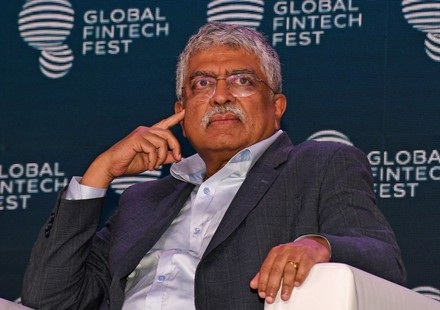
Nandan Nilekani at the Global Fintech Fest
When Nandan Nilekani helped architect Aadhaar and UPI, he was not simply building payment infrastructure. He was creating the preconditions for an entire generation of fintech, credit, and commerce startups that could not have existed before those rails were in place.
Founders who moved immediately after UPI crossed critical mass built on infrastructure suddenly available to a billion people
The ones who waited found themselves in a crowded market with entrenched players
Timing was not a detail in that window, it was the entire thesis.
What You Need to Show a VC About Your Timing
A VC does not need to be told your market is large, instead they need to feel that participating now is a steal and that waiting means the opportunity belongs to someone else. Your timing argument needs to answer three things clearly:
What has shifted in the last 12 to 24 months, in regulation, infrastructure, customer behaviour, or technology, that has opened this window?
Why would building this three years ago have been significantly harder or outright impossible?
What happens to this opportunity if no one moves on it in the next 12 months?
The Fundraising Mistakes That Kill Your Chances Before the Pitch Even Starts
Most fundraising mistakes happen in the decisions founders make before they ever walk into the room. Here are the most common ones, and what to do instead.
1.Approaching the Wrong Type of Investor for Your Stage
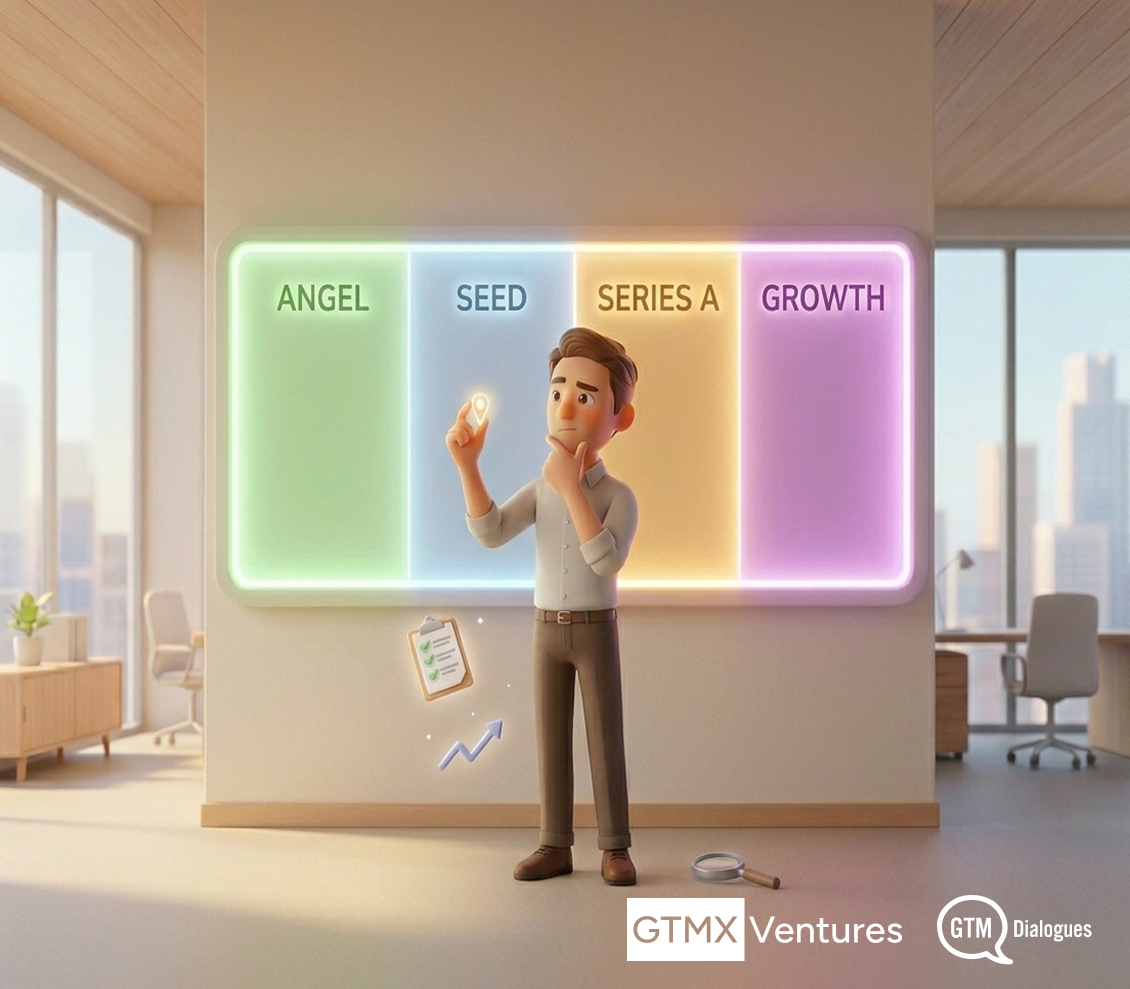
Many founders treat all investors as interchangeable and approach VCs when an angel is the right first call, or pitch angels on a business that needs institutional capital to move. An angel investor is typically an individual deploying their own capital at pre-seed or idea stage, with check sizes ranging from a few lakhs to a few crores. A VC is a fund manager with a formal investment mandate, return targets, and a portfolio construction strategy that demands a specific stage and scale. Pitching a VC before you have the signals they need to make a case to their partnership is not brave. It is early, and early passes are hard to walk back.
Know whether you need conviction capital or validation capital before you start reaching out
Angels move faster and with less due diligence, making them the right first call when you are still finding product-market fit
A VC relationship that starts too early often closes the door for when the timing is actually right
2.Running an Uncoordinated Parallel Process
Most founders know they should approach multiple investors at the same time. What they get wrong is running that process without structure, where different investors are getting different versions of the story, meetings are spread across weeks with no momentum, and there is nothing creating urgency on the other side. Elizabeth Yin of Hustle Fund has been direct about this: a tight, fast, clear process is what generates FOMO, and FOMO is what closes rounds.
Approach investors in batches, not one at a time
Use early term sheets or soft commits to create momentum across the board
A compressed, well-run process signals to investors that other smart people are also paying attention.
3.Answering the Three Questions With Enthusiasm Instead of Evidence
Every VC meeting traces back to three questions: can this become a big enough outcome, are you the right founder, and why now. The most common mistake founders make is answering all three with conviction and energy instead of grounded, specific evidence. Conviction is table stakes. Every founder who walks in believes in their startup. What a VC is looking for is the specific data point, customer insight, or market signal that makes the answer undeniable.
Replace "we are going after a massive market" with the specific beachhead and why it is the right entry point
Replace "I am passionate about this problem" with the specific experience or insight that makes you the most qualified person in the room to solve it
Replace "now is a great time to build this" with the precise shift in regulation, infrastructure, or behaviour that has opened the window
4.Misreading "We Are Not the Right Fit" and Walking Away Without Asking Why
This is one of the most expensive mistakes founders make in the fundraising process. A pass almost never means your startup is bad. It usually means one of three things: your stage doesn't match where the fund deploys capital, your sector sits outside their current thesis, or they can't see a path to the return size their fund needs. Most founders hear the pass and move on. The right response is to ask directly which of these it is.
Most investors will tell you honestly if you ask the right question
That feedback is often more useful than a yes that takes six months to arrive
A clear reason for a pass helps you refine the process for the next conversation, not just absorb the rejection.
5.Pitching Before You Have the Right Signals in Place
A VC's decision timeline is not just about their process. It is also about whether you have given them enough to make a case internally. Early-stage decisions in India typically take anywhere from 4 to 12 weeks from first meeting to term sheet, but that clock only starts ticking productively when a founder walks in with the right traction signals for their stage. Funds like Peak XV's Surge and Y Combinator run structured cohort processes with defined entry criteria precisely because stage-appropriate signals matter.
Understand what signals a fund looks for at your stage before you reach out
A meeting taken too early rarely converts and often closes the relationship for when you actually need it
The variable you control is how tight and well-prepared your process is when you do go out.
Fundraising Mistakes
Five mistakes that close doors before you open them
Pitching a VC before you have the signals they need to make a case internally.
01
Wrong investor for your stage
Different investors hearing different stories with no momentum and no urgency on either side.
02
Uncoordinated parallel process
Answering the three VC questions with passion and energy instead of grounded, specific evidence.
03
Enthusiasm over evidence
Hearing a pass and walking away without asking if it was stage, sector, or return potential.
04
Misreading the pass
Taking meetings before you have the stage-appropriate signals a VC needs to make a case internally.
05
Pitching too early
Fundraising is a test of how well you understand the person you are raising from and whether you have done the work before you ever ask for the meeting.
You now understand the financial machine you are pitching into, what drives a VC's decision, where your edge as a founder actually sits, and what mistakes quietly close doors before the conversation even begins. That understanding, built before the deck is ever opened, is what separates a serious conversation from a polite pass.
In Part 2 of this series, we go deeper into the decisions that shape your fundraising before you ever reach out to an investor. We will cover the 50 shades of venture capital and why aligning yourself with the right type of investor matters more than most founders realise, how to read the VC model at play and position your startup within it, what stage-specific metrics actually move the needle with investors and why every stage has its own language, and how to make the now-or-never case so compelling that waiting feels like a risk no investor wants to take.
Frequently Asked Questions
What do VCs actually look for when evaluating a startup?
Not a great business. A VC is looking for the one company in their portfolio that can return the entire fund. Every other investment exists in relation to that bet. Your job in the room is not to prove you have a solid business. It is to show why your startup is the one their fund cannot afford to miss.
Why do VCs pass on startups even when the business looks strong?
A pass rarely means your business is bad. It usually means a stage mismatch, a sector outside their current thesis, or an inability to see a path to the return size their fund needs. When you hear a pass, ask directly which of these it is. Most investors will tell you honestly, and that answer is worth more than a slow yes.
What is the power law in venture capital and why does it matter for founders?
Horsley Bridge, one of the largest fund-of-funds managers globally, found that 6% of investments generated 60% of total returns across their entire portfolio. Every VC walks into a meeting knowing this. They are not looking for consistent performers. They are looking for the outlier that carries everything else.
What is the difference between a VC and an angel investor?
An angel deploys their own capital, moves faster, and requires less traction. A VC deploys pooled capital from institutional limited partners and needs stage-appropriate signals before they can make a case internally. Angels are the right first call when you are still finding product-market fit. A VC relationship that starts too early often closes the door for when the timing is actually right.
How should founders think about timing when pitching to investors?
A VC needs to believe the window is open now and will not stay open. Don Valentine of Sequoia built his entire investment philosophy around exploiting markets at the precise moment incumbents had not yet figured out how new technology would reshape their industry. Show what has changed in the last 12 to 24 months that makes now the only logical moment to build what you are building.
What mistakes do founders make before they even walk into a VC meeting?
The most expensive mistakes happen before the pitch. Approaching the wrong investor for your stage, running an uncoordinated process with no urgency, and answering the three core VC questions with conviction instead of evidence. Fundraising is a structured process. The founders who treat it as one raise faster and on better terms.
Saurabh Lahoti
Saurabh Lahoti is the founder of GTMDialogues, helping early-stage B2B startups scale with sharper GTM strategy, inbound marketing, and founder-led storytelling.







.png)

.png)
.png)

.png)


.png)
.png)
